






As we step into 2026, LED video wall trends 2026 are shaped by the lingering effects of 2025’s raw material price surges and exciting technological advancements. At LeYe Display, we’ve seen firsthand how global supply chain disruptions—from silicon wafer shortages to rising copper costs—have reshaped the industry. This guide explores the impact of raw material price increase on LED video wall 2026, while providing a forward-looking LED video wall industry forecast after 2025 price rise. Whether you’re planning a church installation, conference room upgrade, or rental setup, understanding these dynamics is key to smart investments.
The 2025 Raw Material Price Surge: Causes and Immediate Effects
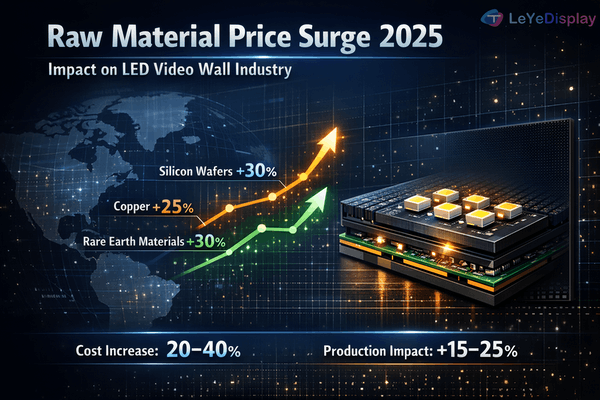
The end of 2025 marked a turbulent period for the LED industry, with raw material costs spiking 20-40% across key components. Silicon wafers, essential for LED chips, rose due to semiconductor demand from EVs and AI data centers. Copper, used in wiring and PCBs, increased 25% amid mining strikes and energy crises. Rare earths like phosphor materials also surged 30% from export restrictions in major producing countries.
This price volatility directly influenced how raw material costs affect LED display prices 2026. Manufacturers faced higher production expenses, leading to a 15-25% average increase in LED video wall pricing. For buyers, this meant delayed projects and budget overruns, especially for large-scale installations like outdoor digital signage or indoor fine-pitch walls.
In our experience at LeYe Display, these rises exacerbated supply chain bottlenecks, with lead times extending from 4-6 weeks to 8-12 weeks. The impact of raw material price increase on LED video wall 2026 is most felt in high-end COB (Chip on Board) models, where material purity is critical for performance.
Impact on 2026 Initial LED Video Wall Industry
Entering 2026, the ripple effects are clear. The LED video wall industry forecast after 2025 price rise predicts a shift toward cost-optimized designs. Expect:
- Price Stabilization with Premium Shifts: Entry-level SMD walls may see slight drops as supply rebounds, but COB and Mini-LED prices remain elevated 10-15%, pushing buyers toward value-driven options.
- Supply Chain Diversification: Manufacturers like us are sourcing from multiple regions (e.g., Vietnam, India) to mitigate risks, reducing delays but increasing logistics costs.
- Innovation Acceleration: To offset rises, how raw material costs affect LED display prices 2026 is driving efficiency—thinner substrates and recycled materials cut waste by 20%.
For sectors like churches and conferences, this means prioritizing durable, low-maintenance walls to justify higher upfront costs. Our COB series, for instance, offers 40% energy savings, helping offset long-term expenses.
| Factor | 2025 Impact | 2026 Forecast |
|---|---|---|
| Raw Material Costs | +20-40% (silicon, copper) | Stabilize at +10-15% |
| Video Wall Pricing | +15-25% overall | Premium COB +10%, budget SMD stable |
| Lead Times | Extended to 8-12 weeks | Back to 6-8 weeks with diversification |
| Industry Response | Supply shortages | Focus on efficiency & recycling |
This table highlights the impact of raw material price increase on LED video wall 2026, emphasizing resilience through adaptation. (MarketsandMarkets)
2026 LED Video Wall Industry Trends: Opportunities Amid Challenges
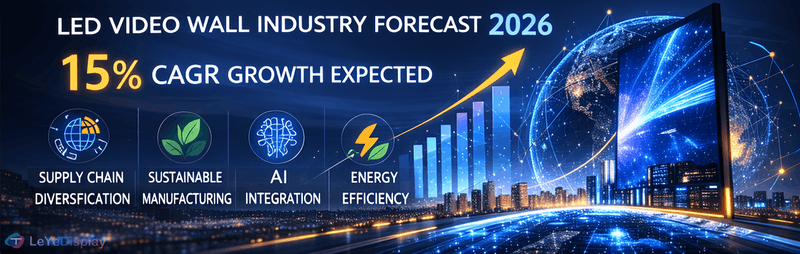
Despite headwinds, LED video wall trends 2026 point to robust growth, projected at 15% CAGR by MarketsandMarkets. Key developments include:
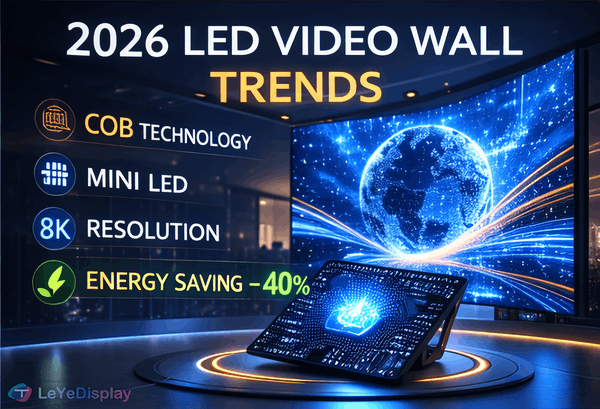
- Micro/Mini-LED Dominance: Finer pitches (P0.6-P0.9) become standard, driven by demand for 8K resolution in control rooms and broadcasting. COB tech leads with seamless integration.
- Energy Efficiency Focus: Post-price rise, LED video wall trends 2026 emphasize low-power ICs and AI-optimized brightness, cutting energy use by 50% in outdoor applications.
- Sustainability Push: Recycled materials and modular designs reduce environmental impact, aligning with EU regulations. Expect “green-certified” walls to gain market share.
- AI & Smart Integration: Video walls with embedded analytics for crowd monitoring in events or adaptive content in churches.
- Supply Chain Resilience: Localized manufacturing in Asia-Pacific stabilizes prices, benefiting buyers in Europe and North America.
The LED video wall industry forecast after 2025 price rise suggests consolidation among top players, with innovators like LeYe Display thriving through R&D in COB efficiency.
Navigating the Market: Tips for Buyers in 2026
To counter how raw material costs affect LED display prices 2026, prioritize:
- Long-term TCO over initial cost—opt for energy-efficient models.
- Verify specs with third-party tests (e.g., TÜV certified).
- Partner with manufacturers offering transparent supply chains.
At LeYeDisplay, our 2026 lineup reflects these LED video wall trends 2026, with COB walls designed for durability and value.
FAQ: LED Video Wall Trends 2026
- What is the impact of raw material price increase on LED video wall 2026? It raises costs 10-15% but drives innovation in efficiency.
- How does 2025 price rise affect LED video wall industry forecast? Growth remains strong at 15% CAGR, with focus on sustainable tech.
As LED video wall trends 2026 evolve, staying informed ensures smart decisions. Contact LeYeDisplay for customized advice and quotes—let’s build your perfect display solution.