LED video wall sustainability 2025 has officially become one of the top three decision criteria for corporate buyers, system integrators, government procurement teams, and Fortune 500 AV directors — right alongside pixel pitch and total cost of ownership.
Soaring electricity prices (up 40–60 % in Europe and parts of North America since 2022), mandatory ESG reporting under CSRD and SEC rules, and customer demands for Scope 3 carbon reduction are forcing every serious player to rethink power consumption, materials, and end-of-life strategy.
The result? A wave of genuine energy-efficient LED displays and sustainable LED video wall innovations that actually deliver measurable ROI instead of just greenwashing. This rapid evolution in led video wall sustainability 2025 means buyers can finally achieve real energy savings without compromising performance.
Ultra-Low-Power Architecture: The Biggest Energy Saver Since LED Itself
The push for led video wall sustainability 2025 starts with cutting power waste, where new architectures shine.
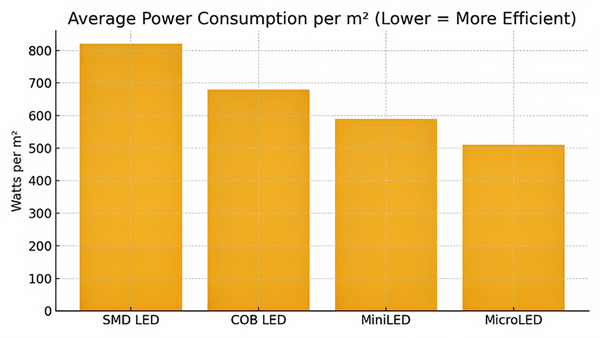
Old-school SMD + common-anode designs waste 25–40 % of electricity as heat. In 2025, three proven technologies have become the new baseline for led video wall sustainability:
- Common-Cathode Power Supply: Separates RGB voltage → 20–35 % lower consumption, cabinet temperatures drop 12–18 °C, enabling completely fan-less designs and smaller power supplies.
- Flip-Chip COB & Mini/Micro LED MIP Packaging: Higher lumen-per-watt, better thermal path, and junction temperatures 20–30 % lower than SMD → diode lifespan jumps from ~100,000 h to 150,000+ h.
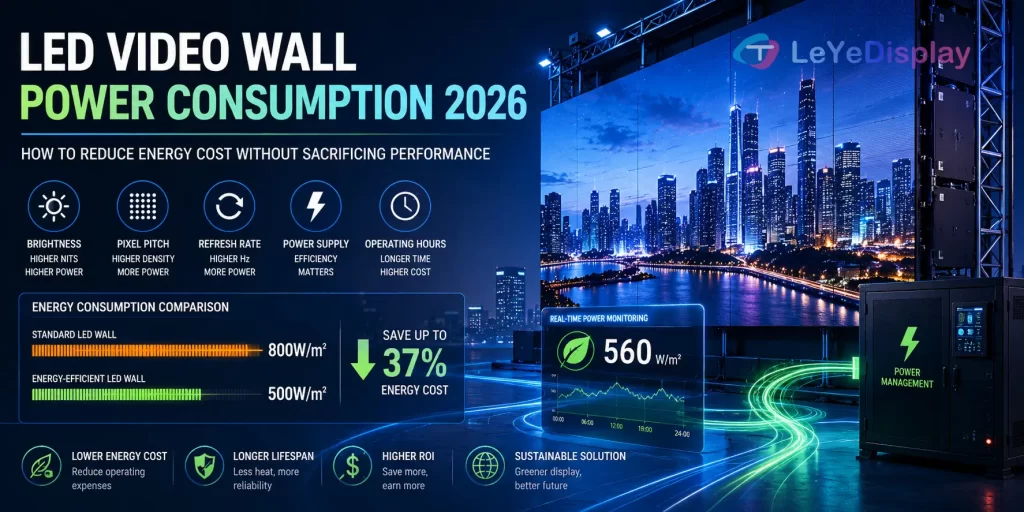
- AI-Driven Dynamic Power Management: Real-time ambient light sensors + content-aware brightness scaling + dark-scene power gating. Real-world data from 2024–2025 control-room projects show 28–42 % annual electricity savings in 16/7 or 24/7 operation.
Recyclable Materials & Circular Design Are Now Table Stakes
Material innovation is key to achieving led video wall sustainability 2025, with recyclability now a must-have.
Regulatory pressure (EU WEEE, China RoHS 2.0, U.S. state-level e-waste laws) plus brand reputation have pushed manufacturers to:
- Switch to 100 % lead-free solder and halogen-free PCBs
- Use 80–95 % recyclable extruded aluminum frames
- Design fully modular “pixel-engine” cards that can be swapped without discarding the entire cabinet
- Replace traditional Styrofoam with molded pulp and biodegradable corner protectors
LeyeDisplay, for example, ships every cabinet with recyclable aluminum pallets and zero-plastic protective film, cutting packaging waste by 70 % compared to industry average.
Green Certifications That Actually Move the Needle in 2025
The certifications buyers now demand before even opening a quote:
| Certification | Region / Buyer Type | What It Proves |
|---|---|---|
| Energy Star 8.0 Signage | North America, Enterprise | Real measured power consumption |
| TCO Certified Gen 9 | Europe, Government | Lifecycle + social responsibility |
| EPEAT Gold | USA Federal & Education | Recyclability + low toxic materials |
| ISO 14001 + 50001 | Global corporates | Environmental & energy management system |
| Carbon Trust / CDP | Fortune 1000 | Verified Scope 1–3 emissions data |
Missing even one of these can disqualify you from EU public tenders and many U.S. federal contracts in 2025.
Full Lifecycle Sustainability: Where the Real Money Is Saved
When evaluating led video wall sustainability 2025, smart buyers now look at the entire lifecycle—from shipping to end-of-life.
Pre-installation
- Flat-pack + nested cabinet design → 40 % more m² per container → lower freight emissions
- Digital documentation only → zero paper manuals
Operation (5–12 years)
- Common-cathode + dynamic dimming → average 1.8–2.2 kWh/m²/year for indoor fine-pitch (vs 3.5–4.5 kWh previously)
- Lower heat → HVAC savings of $0.8–$1.2 per m² annually in air-conditioned rooms
End-of-life
- Front-service modular cards → 60–70 % less electronic waste
- Aluminum frame buy-back programs emerging in Europe and China
The New Procurement Reality: Prove Your Numbers or Lose the Deal
In every led video wall sustainability 2025 RFP we see, procurement teams now demand:
- Exact kWh/m² at 300–500–800 nits
- Luminous efficacy (lm/W) curves
- Third-party verified carbon footprint report
- 5-year TCO model including energy and maintenance
Some controllers even display real-time CO₂ savings on-screen — a feature that has become a deciding factor in several recent Middle East and Nordic projects.
How LeyeDisplay Is Setting the Sustainability Benchmark
LeyeDisplay sustainable LED video wall solutions check every modern box:
- Full common-cathode architecture on all P0.9–P2.5 indoor series
- 98 % recyclable cabinet materials with take-back program
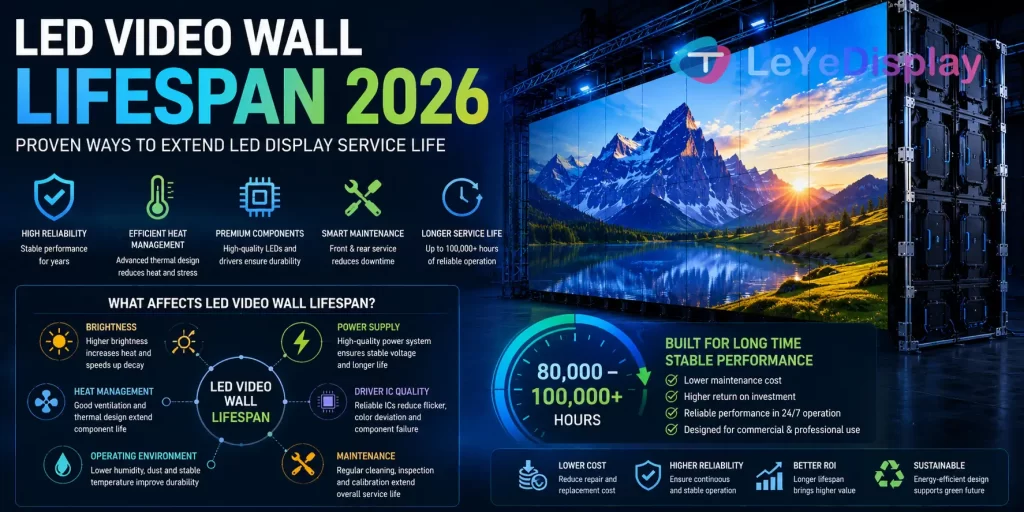
- Flip-chip COB + GOB protection for zero dust and 150,000 h life
- Built-in energy monitoring dashboard accessible via web interface
- Certified Energy Star, TCO, and ISO 14001 factory
Clients routinely report 32–38 % lower electricity bills and full compliance with the strictest ESG requirements.
Green Is the New Black in 2025
LED video wall sustainability 2025 is no longer optional—it’s the deciding factor in multi-million-dollar tenders worldwide.
The brands that combine breakthrough energy-efficient LED display technology with transparent, certified lifecycle responsibility will dominate the next decade.
Ready to future-proof your projects with truly green, high-performance video walls that slash both carbon footprint and operating costs?
Drop your specs below or contact LeyeDisplay for a free 2025 Sustainability & TCO Audit — we’ve already helped 200+ partners worldwide make the switch.
— LeyeDisplay Global Green AV Team (Cognitive)