





LED 비디오 월 밝기 2026 는 더 이상 가장 높은 니트 값을 선택하는 단순한 문제가 아닙니다. 전문 AV 프로젝트에서 밝기 선택은 전력 소비, 시청 편의성, 카메라 호환성, 장기적인 시스템 안정성에 직접적인 영향을 미칩니다.
LED 기술이 미세 피치 COB, 미니LED, AI 제어 밝기 관리로 발전함에 따라 엔지니어와 구매자는 데이터시트뿐 아니라 실제 환경에 맞게 밝기를 지정하는 방법을 다시 생각해야 합니다.
이 가이드는 엔지니어링 표준, 애플리케이션 시나리오 및 측정 가능한 성능 지표를 기반으로 2026년 LED 비디오 월 밝기를 선택하는 방법을 설명하여 과잉 사양 및 성능 저하 설치를 방지하는 데 도움을 줍니다.
2026년에 LED 비디오 월 밝기가 더 중요한 이유
이전 세대의 LED에서는 명암비와 낮은 그레이스케일을 보정하기 위해 밝기를 사용하는 경우가 많았습니다. 2026년부터는 이러한 접근 방식이 더 이상 적용되지 않습니다.
이제 최신 LED 비디오 월 시스템이 등장했습니다:
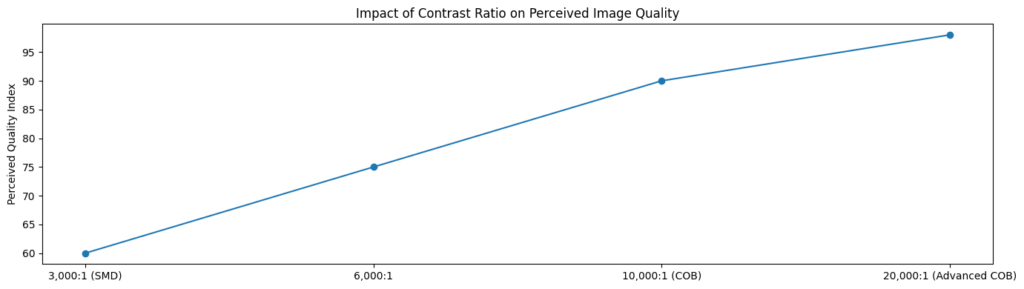
- 더 높은 기본 명암비(COB 사용 시 최대 20,000:1)
- 로우 그레이 성능 향상(16~18비트 처리)
- 공통 음극 및 AI 디밍을 통한 더욱 스마트한 전력 관리
결과적으로 과도한 밝기는 종종 이미지 품질 저하, 특히 실내 환경에서는 눈부심을 증가시키고 에너지를 낭비합니다.
LED 비디오 월 밝기 선택 방법 2026(엔지니어링 표준)
선택 시 LED 비디오 월 밝기 2026, 엔지니어는 환경, 가시 거리 및 작동 듀티 사이클과 함께 밝기를 평가해야 합니다.
1. 실내 전문가 환경
일반적인 애플리케이션:
회의실, 관제 센터, 기업 로비, 방송 스튜디오
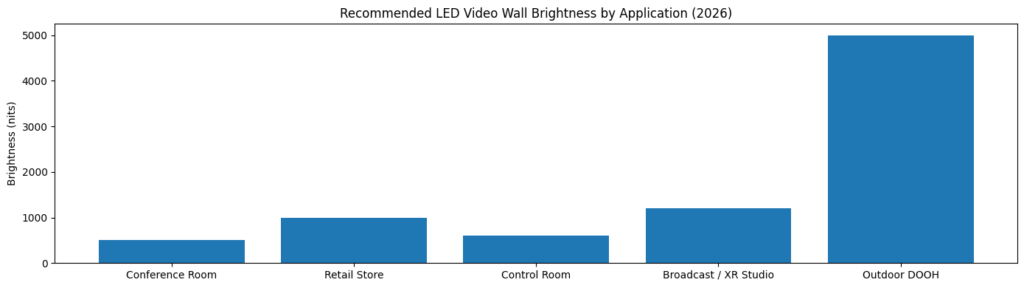
- 권장 밝기: 500-800 니트
- Why: 제어된 조명 환경은 더 높은 밝기의 이점을 누릴 수 없습니다.
- 과도한 밝기로 인한 공학적 위험: 눈의 피로, 명암 인식 감소, 전력 소비 및 발열 증가
대부분의 실내 프로젝트에서 1000니트 이상의 밝기는 시각적 이점을 제공하지 않습니다.
2. 반조명 공공 공간
일반적인 애플리케이션:
소매점, 공항, 전시장
- 권장 밝기: 800-1200 니트
- 핵심 요소: 주변 조명 변화, 시야각, 콘텐츠 가독성
균형 잡힌 밝기로 주변 공간을 압도하지 않으면서도 가시성을 보장합니다.
3. 실외 및 주변 조도가 높은 애플리케이션
일반적인 애플리케이션:
야외 DOOH, 경기장, 교통 중심지
- 권장 밝기: 3000-6000+ 니트
- 중요한 요구 사항: 햇빛 아래 고대비, 자동 밝기 조정, 전원 및 열 제어
실외 LED 비디오 월은 밝기를 마케팅 지표가 아닌 필수 요소로 사용합니다.
밝기 대 전력 소비: 숨겨진 비용
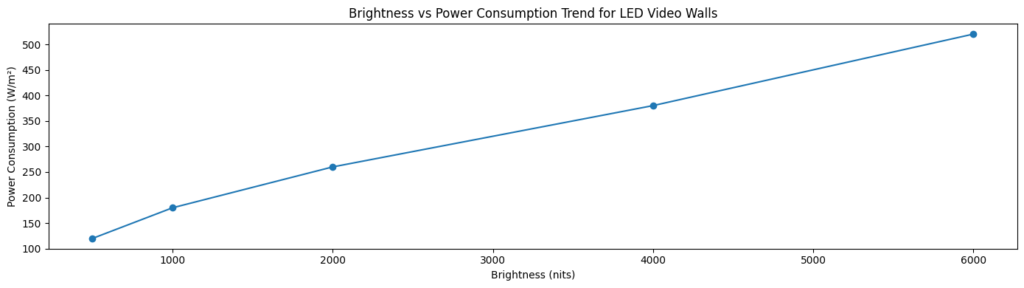
밝기가 높을수록 항상 전력 소모량이 증가합니다.
엔지니어링 측정에서:
- 600 니트 ≈ 120-150 W/m²
- 1000 니트 ≈ 180-220 W/m²
- 3000 니트 ≈ 350+ W/m²
24/7 환경에서 밝기를 과도하게 지정하면 연간 운영 비용이 다음과 같이 증가할 수 있습니다. 30-40%, 사용자 경험을 개선하지 않고도 가능합니다.
이것이 바로 최신 LED 비디오 월 밝기 2026 전략이 강조하는 이유입니다:
- 공통 음극 드라이버
- 동적 밝기 제어
- 콘텐츠 인식 휘도 스케일링
밝기, 대비 및 체감 화질
밝기만으로는 선명도를 정의할 수 없습니다.
주요 엔지니어링 관계:
- 더 높은 명암비 + 적당한 밝기
→ 다음보다 더 나은 이미지 품질 - 고휘도 + 저대비
COB LED 기술은 픽셀 사이의 빛 누출을 줄여 낮은 밝기로도 뛰어난 블랙 레벨과 깊이를 구현할 수 있는 탁월한 기술입니다.
LED 비디오 월 프로젝트에서 흔히 저지르는 밝기 실수
2026년에도 엔지니어들은 여전히 반복되는 실수에 직면합니다:
- 실외 밝기 사양을 실내용으로 복사하기
- 방송 공간에 대한 카메라 요구 사항 무시
- “더 밝게 = 더 높은 품질”이라고 가정하기”
- 총소유비용(TCO) 계산 실패
정답 LED 비디오 월 밝기 2026 선택은 항상 브로셔의 주장이 아닌 환경으로부터 시작됩니다.
실제 밝기 선택 표(엔지니어링 참조)
| 애플리케이션 | 권장 밝기 | 엔지니어링 우선 순위 |
|---|---|---|
| 회의실 | 500-600 니트 | 눈의 편안함, 대비 |
| 제어실 | 600-800 니트 | 연중무휴 24시간 안정성 |
| 리테일 / 로비 | 800-1000 니트 | 가시성 + 심미성 |
| 방송 스튜디오 | 600-800 니트 | 카메라 친화적 |
| 아웃도어 DOOH | 4000-6000 니트 | 햇빛 가독성 |
엔지니어링 인사이트: 낮은 밝기가 종종 더 나은 성능을 발휘하는 이유
실제 배포에서 시스템은 다음에서 작동합니다. 최대 밝기 60-70% 쇼:
- 더 길어진 LED 수명
- 장애 발생률 감소
- 보다 안정적인 컬러 보정
다음과 같은 전문 솔루션 제공업체 LeyeDisplay, 엔지니어링 솔루션 파트너로서 점점 더 많은 LED 시스템을 설계하고 있습니다. 애플리케이션에 최적화된 밝기 피크 출력값이 아닌.
최종 평결: LED 비디오 월 밝기 2026, 제대로 구현하기
2026년, 이해 LED 비디오 월 밝기 2026 는 엔지니어링 관점에서 구매자가 과잉 사양을 피하고 에너지 낭비를 줄이며 장기적인 ROI를 보장하는 데 도움이 됩니다.
밝기는 항상 다음을 기준으로 선택해야 합니다:
- 환경 조명
- 시야 거리
- 운영 시간
- 전력 효율 목표
밝기를 올바르게 지정하면 밝기는 성능에 방해가 되는 것이 아니라 성능을 향상시키는 요소가 됩니다.