





2025년에 3840Hz가 가장 오해받는 LED 사양인 이유
구매자가 다음과 같은 질문을 할 때 “3840Hz 재생률이 LED 비디오 월에 충분한가요?”, 를 사용하는 경우 일반적으로 실제 프로젝트 문제-카메라 깜박임, 밴딩 또는 불안정한 이미지 - 다음과 같이 광고되는 화면을 사용하더라도 높은 새로 고침 빈도.
2025년, 3840Hz가 가장 일반적으로 인용되는 주사율이 되었습니다. LED 비디오 월 사양에서. 하지만 많은 엔지니어, 통합업체, 최종 사용자는 여전히 이 수준에서 플리커, 스캔 라인 또는 카메라 아티팩트를 경험하고 있습니다.
따라서 진짜 문제는 3840Hz가 높은지 여부, 하지만: 3840Hz 주사율로 충분한가요? 당신의 애플리케이션을 사용하시나요?
이 문서에서는 이 질문에 대한 답을 엔지니어의 관점, 가 고장났습니다:
- 3840Hz의 실제 의미
- 3840Hz LED 비디오 월 성능으로 충분한 경우
- 3840Hz에서 LED 화면 깜박임이 여전히 발생하는 이유
- 사용 사례별 LED 비디오 월 프로젝트의 권장 재생률
3840Hz 주사율은 실제로 무엇을 의미하나요?
재생률(Hz)은 다음을 나타냅니다. LED 화면이 초당 이미지를 업데이트하는 횟수.
- 3840Hz = 초당 3,840번의 이미지 새로 고침 주기
- 사람의 눈에 보이는 깜박임을 줄여줍니다.
- 모션의 부드러움과 밝기 안정성을 개선합니다.
하지만, 재생률만으로는 카메라 친화성이나 전문적인 이미지 품질을 보장할 수 없습니다..
엔지니어는 새로 고침 빈도를 다음과 같이 취급합니다. 하나의 변수 더 큰 신호 대 조명 시스템에서.
3840Hz 주사율은 사람이 보기에 충분한가요?
짧은 답변: 예, 대부분의 실내 애플리케이션의 경우
For 인간의 시각, 일반적으로 3840Hz면 충분합니다.
일반적인 사용 사례 3840Hz LED 비디오 월 성능으로 충분:
| 애플리케이션 | 평결 |
|---|---|
| 기업 회의실 | ✅ 충분 |
| 실내 소매점 사이니지 | ✅ 충분 |
| 호텔 로비 | ✅ 충분 |
| 제어실(비방송) | ✅ 일반적으로 충분 |
일반적인 시청 거리에서 사람의 눈은 수백 Hz 이상의 깜박임을 감지할 수 없습니다. 에서 시각적 편안함의 관점, 3840Hz는 이미 요구 사항을 초과합니다. (by. 조라)
3840Hz에서 LED 화면 깜박임이 카메라에서 여전히 발생하는 이유
여기서부터 혼란이 시작됩니다.
많은 프로젝트 경험 3840Hz에서 LED 화면 깜박임, 특히
- 라이브 스트리밍
- 방송 촬영
- 하이브리드 회의 녹화
- XR / 가상 프로덕션
핵심적인 이유입니다:
카메라 센서는 사람의 눈처럼 “보는” 것이 아닙니다.
상호 작용합니다:
- PWM 디밍 주파수
- 스캔 방법(행/열 구동)
- 그레이 스케일 비트 깊이
- 드라이버 IC 응답 속도
- 카메라 셔터 속도 및 프레임 속도
3840Hz 재생률만으로는 카메라 깜박임을 해결할 수 없습니다.
엔지니어 분석: 3840Hz로는 충분하지 않은 이유
1. PWM 주파수가 너무 낮음
많은 LED 패널은 다음과 같이 광고합니다. 3840Hz 주사율, 하지만 PWM 디밍 주파수 만 1-2kHz.
결과:
- 카메라의 밴딩
- 낮은 회색 레벨에서 밝기 펄싱
엔지니어는 다음 사항을 더 중요하게 생각합니다. PWM 주파수 일관성 마케팅 새로고침 횟수보다 중요합니다.
2. 그레이 스케일 제한(14비트 대 16비트)
낮은 회색 수준의 불안정성 원인:
- 어두운 장면에서 깜박임
- 카메라의 색상 분리
3840Hz에서도 마찬가지입니다:
- 14비트 그레이 스케일 = 더 높은 위험
- 16비트 이상 = 안정적인 방송 이미지
3. 스캔 모드 병목 현상(1/16, 1/32 스캔)
높은 스캔 비율 감소 픽셀당 유효 새로 고침 횟수.
예시:
- 3840Hz + 1/32 스캔 ≠ 픽셀당 실제 3840Hz
이러한 불일치는 다음과 같은 일반적인 원인입니다. 높은 주사율에도 불구하고 카메라 깜박임.
애플리케이션별 LED 비디오 월 권장 재생률
그래서 뭐 는 2025년 LED 비디오 월 프로젝트에 권장되는 재생률은 얼마인가요?
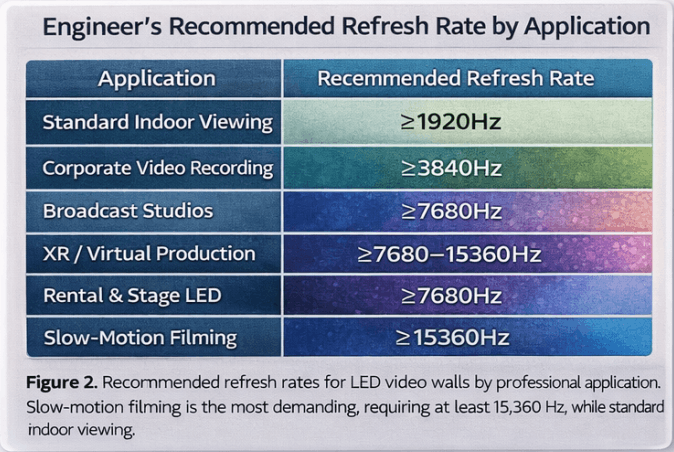
엔지니어 수준 권장 사항 표
| 애플리케이션 | 권장 새로고침 빈도 |
|---|---|
| 표준 실내 시청 | ≥1920Hz |
| 기업 비디오 녹화 | ≥3840Hz |
| 방송 스튜디오 | ≥7680Hz |
| XR / 가상 프로덕션 | ≥7680-15360Hz |
| 렌탈 및 무대 LED | ≥7680Hz |
| 슬로우 모션 촬영 | ≥15360Hz |
3840Hz는 보편적인 솔루션이 아닌 기준입니다.
3840Hz 주사율은 언제 충분할까요?
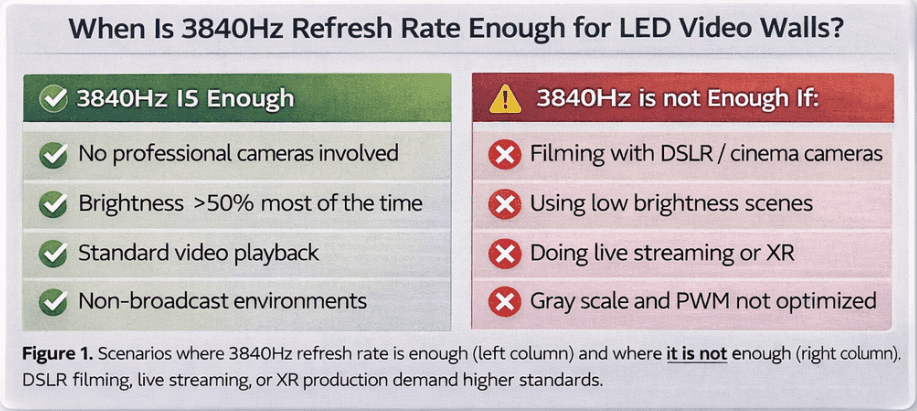
✅ 3840Hz면 충분합니다:
- 전문가용 카메라가 필요하지 않습니다.
- 대부분의 경우 밝기 > 50%
- 표준 동영상 재생
- 비방송 환경
❌ 3840Hz로는 충분하지 않은 경우:
- DSLR/시네마 카메라로 촬영하기
- 저휘도 장면 사용
- 라이브 스트리밍 또는 XR 수행
- 그레이 스케일 및 PWM이 최적화되지 않았습니다.
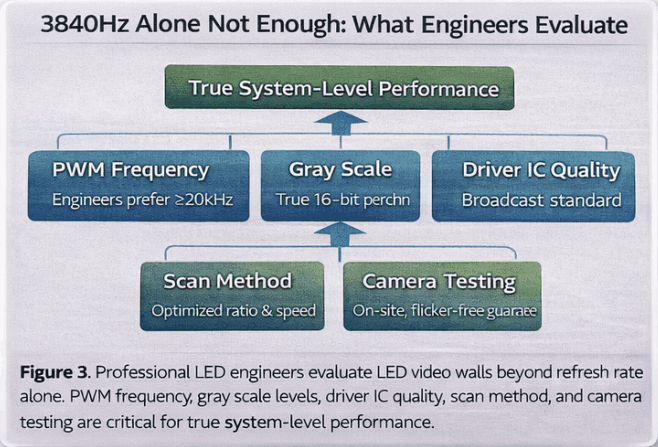
엔지니어가 새로고침 빈도 그 이상으로 살펴보는 것들
전문 LED 엔지니어가 평가 시스템 수준 성능, 를 포함합니다:
- 드라이버 IC 아키텍처
- PWM 주파수(≥20kHz 선호)
- 트루 16비트 그레이 스케일
- 스캔 비율 최적화
- 낮은 밝기에서의 보정
- 카메라 셔터 호환성
그렇기 때문에 “3840Hz'가 적용된 두 개의 화면이 다음과 같은 성능을 발휘할 수 있습니다. 완전히 다르게 를 카메라에 담습니다.
3840Hz 주사율이면 충분할까요?
예 - 하지만 올바른 상황에서만 가능합니다.
3840Hz 재생률은 사람이 보기에 충분하고 기본적인 전문가용으로도 충분합니다.
카메라가 중요한 애플리케이션에는 그 자체만으로는 충분하지 않습니다.
프로젝트에 촬영, 방송 또는 미래 지향적인 콘텐츠 제작이 포함된 경우, 주사율은 드라이버 IC, PWM, 그레이 스케일 및 스캔 방법과 함께 평가해야 합니다..
구매 전 엔지니어의 조언
LED 비디오 월을 선택하기 전에 항상 물어보세요:
- 3840Hz 주사율로 충분한가? 내 카메라의 경우?
- PWM 디밍 주파수는 무엇인가요?
- 그레이 스케일은 진정한 16비트인가요?
- 화면이 카메라 테스트를 거쳤나요?
공급업체가 이러한 질문에 명확하게 답변할 수 없는 경우, 사양서만으로는 신뢰할 수 없습니다..
카메라에 안전한 LED 비디오 월 추천이 필요하신가요?
다음과 같은 엔지니어링 중심 솔루션 제공업체와 협력 LeyeDisplay, 의 일부로 취급되며, 여기서 새로고침 속도는 완벽한 디스플레이 시스템, 마케팅 번호가 아닙니다.
📩 문의하기 를 참조하여 애플리케이션별 평가 및 카메라 테스트 지침을 확인하세요.