La durabilité des murs vidéo LED 2025 est officiellement devenue l'un des trois principaux critères de décision des acheteurs d'entreprise, des intégrateurs de systèmes, des équipes chargées des marchés publics et des directeurs audiovisuels du Fortune 500, au même titre que le nombre de pixels et le coût total de possession.
La flambée des prix de l'électricité (de 40 à 60 % en Europe et dans certaines parties de l'Amérique du Nord depuis 2022), les rapports ESG obligatoires en vertu des règles CSRD et SEC, et les demandes des clients en matière de réduction des émissions de carbone de type 3 obligent tous les acteurs sérieux à repenser la consommation d'énergie, les matériaux et la stratégie de fin de vie.
Le résultat ? Une vague de véritables écrans LED à haute efficacité énergétique et d'innovations durables en matière de murs vidéo LED qui offrent un retour sur investissement mesurable au lieu de se contenter de faire de l'écoblanchiment. Cette évolution rapide des mur vidéo à led durabilité 2025 signifie que les acheteurs peuvent enfin réaliser de réelles économies d'énergie sans compromettre les performances.
Architecture à très faible consommation d'énergie : La plus grande économie d'énergie depuis les LED elles-mêmes
La poussée de mur vidéo à led durabilité 2025 commence par la réduction du gaspillage d'énergie, domaine dans lequel les nouvelles architectures brillent.
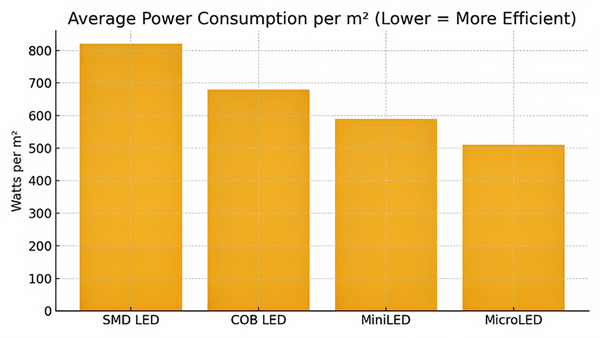
Les anciennes conceptions SMD + anode commune gaspillent 25 à 40 % d'électricité sous forme de chaleur. En 2025, trois technologies éprouvées sont devenues la nouvelle référence en matière de durabilité des murs vidéo à LED :
- Alimentation à cathode commune : Separates RGB voltage → 20-35 % lower consumption, cabinet temperatures drop 12-18 °C, enabling completely fan-less designs and smaller power supplies.
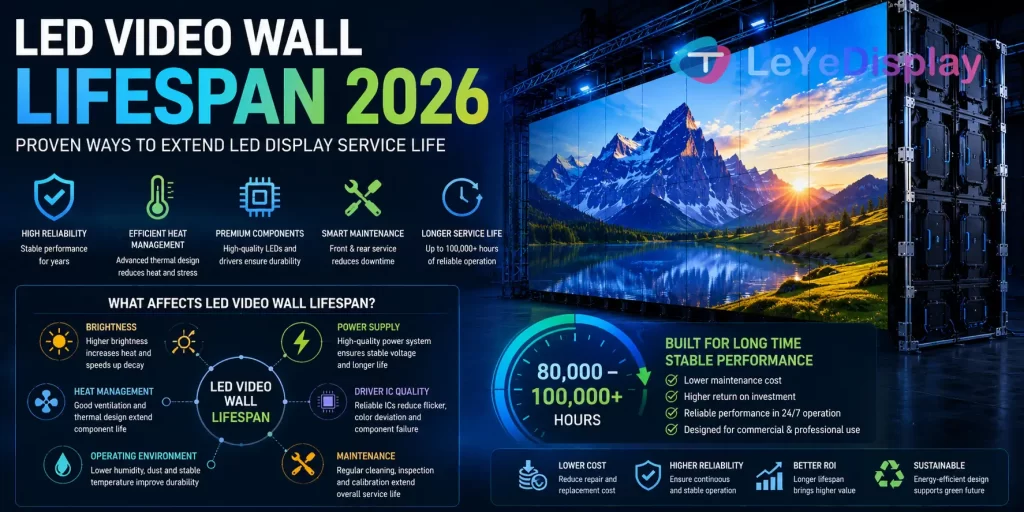
- Flip-Chip COB & Mini/Micro LED MIP Packaging : Luminosité par watt plus élevée, meilleur parcours thermique et températures de jonction inférieures de 20 à 30 % à celles des SMD → la durée de vie des diodes passe de ~100 000 h à 150 000 h et plus.
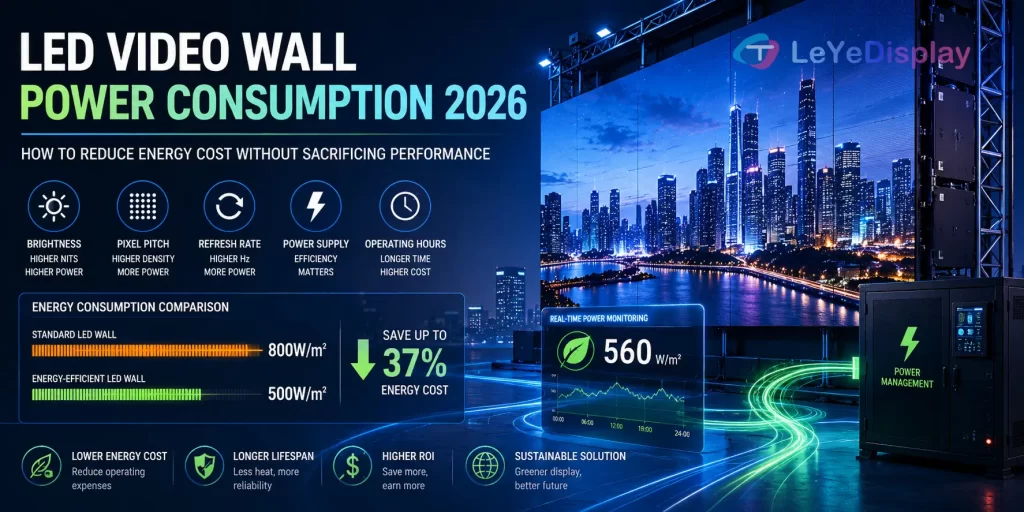
- Gestion dynamique de l'énergie pilotée par l'IA : Capteurs de lumière ambiante en temps réel + mise à l'échelle de la luminosité en fonction du contenu + gestion de l'alimentation en cas d'obscurité. Les données réelles des projets de salles de contrôle 2024-2025 montrent 28-42 % d'économies d'électricité annuelles en fonctionnement 16/7 ou 24/7.
Les matériaux recyclables et le design circulaire sont désormais des enjeux de table
L'innovation en matière de matériaux est essentielle pour atteindre les objectifs suivants mur vidéo à led durabilité 2025, La recyclabilité est aujourd'hui un impératif.
La pression réglementaire (DEEE de l'UE, RoHS 2.0 de la Chine, lois sur les déchets électroniques au niveau de l'État américain) et la réputation de la marque ont poussé les fabricants à.. :
- Passage à 100 circuits imprimés sans plomb % et sans halogène
- Utiliser des cadres en aluminium extrudé recyclable 80-95 %
- Concevoir des cartes “moteur à pixels” entièrement modulaires qui peuvent être remplacées sans avoir à démonter l'ensemble de l'armoire.
- Remplacer le polystyrène traditionnel par de la pâte moulée et des cornières biodégradables.
LeyeDisplay, par exemple, expédie chaque armoire avec des palettes en aluminium recyclable et un film de protection sans plastique, réduisant ainsi les déchets d'emballage de 70 % par rapport à la moyenne du secteur.
Les certifications vertes qui font bouger les choses en 2025
Les certifications que les acheteurs exigent désormais avant même d'ouvrir un devis :
| Certification | Région / Type d'acheteur | Ce qu'il prouve |
|---|---|---|
| Signalisation Energy Star 8.0 | Amérique du Nord, Entreprises | Consommation électrique réelle mesurée |
| TCO Certified Gen 9 | Europe, Gouvernement | Cycle de vie + responsabilité sociale |
| EPEAT Gold | États-Unis Fédéral et éducation | Recyclabilité + matériaux à faible toxicité |
| ISO 14001 + 50001 | Entreprises mondiales | Système de gestion de l'environnement et de l'énergie |
| Carbon Trust / CDP | Fortune 1000 | Données vérifiées sur les émissions du champ d'application 1-3 |
L'omission d'un seul de ces éléments peut vous exclure des appels d'offres de l'UE et de nombreux contrats fédéraux américains en 2025.
Durabilité du cycle de vie complet : Là où l'on économise vraiment de l'argent
Lors de l'évaluation mur vidéo à led durabilité 2025, Les acheteurs avisés prennent désormais en compte l'ensemble du cycle de vie, de l'expédition à la fin de vie.
Pré-installation
- Conception à plat + armoires emboîtées → 40 % m² de plus par conteneur → émissions de fret réduites
- Documentation numérique uniquement → zéro manuel papier
Fonctionnement (5-12 ans)
- Cathode commune + gradation dynamique → moyenne de 1,8-2,2 kWh/m²/an pour l'intérieur à pas fin (contre 3,5-4,5 kWh auparavant)
- Réduction de la chaleur → économies de CVC de $0,8-$1,2 par m² chaque année dans les pièces climatisées
Fin de vie
- Cartes modulaires à service frontal → 60-70 % moins de déchets électroniques
- Les programmes de rachat de cadres en aluminium émergent en Europe et en Chine
La nouvelle réalité des marchés publics : Démontrez vos chiffres ou perdez le marché
Dans chaque mur vidéo à led durabilité 2025 Nous constatons que les équipes chargées des achats exigent désormais des DDP :
- kWh/m² exacts à 300-500-800 nits
- Courbes d'efficacité lumineuse (lm/W)
- Rapport sur l'empreinte carbone vérifié par un tiers
- Modèle de coût total de possession sur 5 ans, incluant l'énergie et la maintenance
Certains contrôleurs affichent même à l'écran les économies de CO₂ en temps réel - une caractéristique qui est devenue un facteur décisif dans plusieurs projets récents au Moyen-Orient et dans les pays nordiques.
Comment LeyeDisplay établit la référence en matière de développement durable
LeyeDisplay Les solutions durables de murs d'images LED répondent à toutes les exigences de la modernité :
- Architecture à cathode commune sur toutes les séries intérieures P0.9-P2.5
- 98 % matériaux recyclables pour armoires avec programme de reprise
- Protection Flip-chip COB + GOB pour une absence de poussière et une durée de vie de 150 000 heures
- Tableau de bord intégré de surveillance de l'énergie accessible via une interface web
- Usine certifiée Energy Star, TCO et ISO 14001
Les clients font régulièrement état de factures d'électricité inférieures de 32 à 38 % et d'une conformité totale avec les exigences ESG les plus strictes.
Le vert est le nouveau noir en 2025
Mur vidéo à LED : durabilité 2025 n'est plus facultatif - c'est le facteur décisif dans des appels d'offres de plusieurs millions de dollars dans le monde entier.
Les marques qui associent une technologie d'affichage LED à haut rendement énergétique à une responsabilité transparente et certifiée en matière de cycle de vie domineront la prochaine décennie.
Vous êtes prêt à assurer l'avenir de vos projets grâce à des murs vidéo écologiques et performants qui réduisent à la fois l'empreinte carbone et les coûts d'exploitation ?
Indiquez vos spécifications ci-dessous ou contactez LeyeDisplay pour un audit gratuit sur la durabilité et le coût total de possession de 2025 - nous avons déjà aidé plus de 200 partenaires dans le monde entier à passer à l'innovation.
— LeyeDisplay L'équipe AV verte mondiale (Cognitif)